



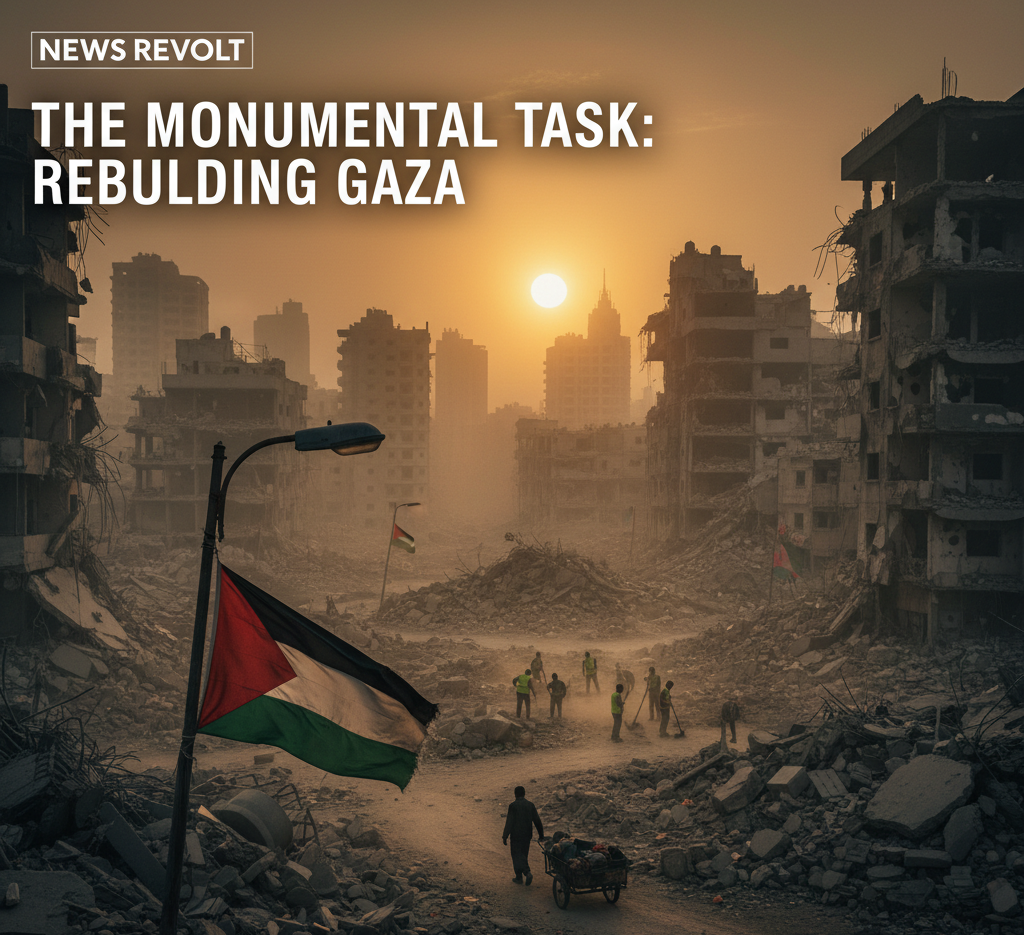
The Gaza Strip faces an unprecedented reconstruction effort following two years of intense conflict, with international assessments describing the territory as one of the most devastated regions in modern history. As of late 2025, approximately 81% of all structures in Gaza have sustained damage, leaving the enclave’s 2.3 million residents grappling with widespread homelessness and crippled infrastructure.
Scale of Physical Devastation
Satellite imagery and ground assessments by the United Nations reveal that the destruction has accelerated in recent months. By October 2025, 198,273 structures were affected, including 123,464 completely destroyed—a 18% increase from July assessments. In Gaza City, the figure rises to 83-92% of buildings damaged or destroyed, transforming densely populated areas into landscapes of rubble.
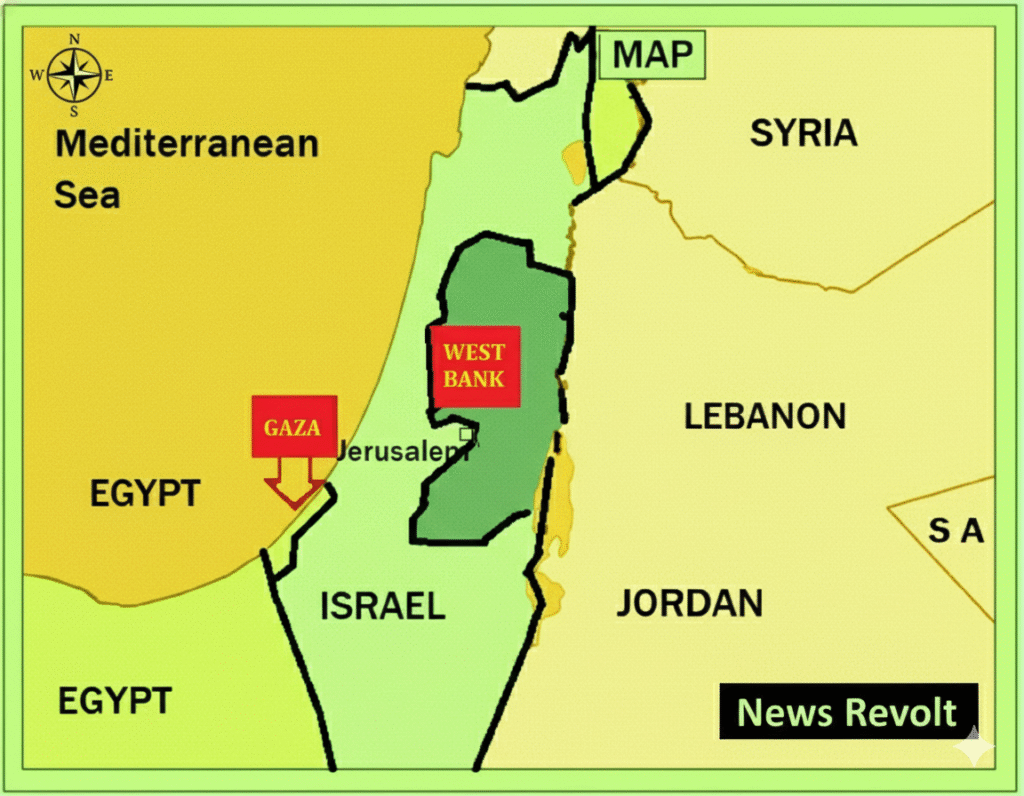
Housing has been hit hardest, with an estimated 320,622 units damaged, affecting over 90% of homes and displacing nearly the entire population. Schools and educational facilities show even higher proportional damage, disrupting learning for hundreds of thousands of children. Critical infrastructure, including power plants, water treatment facilities, sewage systems, and roads, has been severely impaired, with some areas reporting up to 84% overall destruction.
Human Cost and Long-Term Impacts
The conflict’s toll on lives remains staggering. Gaza’s Health Ministry reports at least 69,187 Palestinians killed since October 2023, with over 170,000 injured, many suffering life-altering wounds like amputations. A significant portion of the dead and injured are women and children, and up to 9,500 people remain missing, likely buried under rubble.
Since a fragile ceasefire took hold in October 2025, 245-260 more have died from ongoing strikes or rubble recovery efforts, alongside hundreds wounded. Independent analyses suggest the official figures undercount indirect deaths from disease, starvation, and medical disruptions, potentially pushing the total higher. The rise in child disabilities and psychological trauma underscores the war’s brutality, with rights groups highlighting potential violations of international humanitarian law.
Nearly 60% of families have lost at least one member, compounding grief with economic ruin. Medical professionals report overwhelmed hospitals struggling with chronic cases, as the destruction of health facilities has left Gaza’s healthcare system in tatters.
The Financial and Logistical Hurdles of Rebuilding
Reconstruction demands an estimated $70 billion, according to a joint assessment by the UN, World Bank, and European Union released in October 2025. This figure covers rebuilding homes, hospitals, schools, and essential services like electricity, water, and sanitation—up from earlier $50 billion projections due to escalating damage.
Clearing the debris alone poses a massive challenge: Gaza now holds about 70 million tons of rubble, contaminated with unexploded ordnance and human remains. UN estimates suggest this phase could cost billions more and take years, delaying any broader recovery. The Palestinian government has proposed a $67 billion, five-year plan, starting with $3.5 billion for urgent humanitarian aid and infrastructure stabilization over six months.
Experts emphasize that success hinges on sustained international funding, political stability, and regional cooperation, particularly from Arab states. Without a durable ceasefire, efforts risk repeating cycles of destruction, as seen in past Gaza conflicts. Initial phases require $20 billion over three years just to restore basics, but political obstacles, including Israeli security concerns and donor hesitancy, loom large.
Clarifying Damage Assessments
Reports often differentiate between “destroyed” and “affected” structures to guide planning. Fully destroyed buildings, about 65% in some analyses, are beyond repair and must be rebuilt from scratch. “Affected” encompasses these plus partially damaged ones, pushing totals to 80-90%. This nuance affects costs: partial repairs may be feasible for some homes, but the scale remains daunting.
For instance, while 65% might be classified as destroyed, the broader 81% affected figure includes moderate damage like shattered walls or weakened foundations. Accurate assessments are vital for prioritizing aid, with UNOSAT’s satellite data providing the most reliable baselines.
Media Coverage and Information Battles
The war has also spotlighted challenges in global reporting. Critics accuse some international outlets of biased framing that minimizes Palestinian suffering, while local journalists in Gaza have faced lethal risks—dozens killed while documenting the crisis. Press freedom groups decry the lack of robust protections for these reporters, contrasting with coverage in other conflicts.
Social media has amplified real-time visuals of devastation, from bombed neighborhoods to aid queues, fostering global awareness but also misinformation. This visibility has galvanized calls for accountability, yet debates persist on how narratives influence policy and public opinion.
A Defining Crisis in Real Time
Unlike twentieth-century atrocities, such as World War II bombings or colonial wars in Algeria, Gaza’s destruction has unfolded live on digital platforms, watched by billions over two years. This immediacy has etched it into collective memory as a twenty-first-century humanitarian landmark, demanding urgent global response.
As recovery efforts begin amid tentative calm, Gaza’s residents endure immense loss without full compensation possible. Rebuilding will span decades, requiring not just funds but a commitment to lasting peace to prevent further tragedy.